|
|
O-Ring Seal for Ewarts Petcocks
By LoneStar
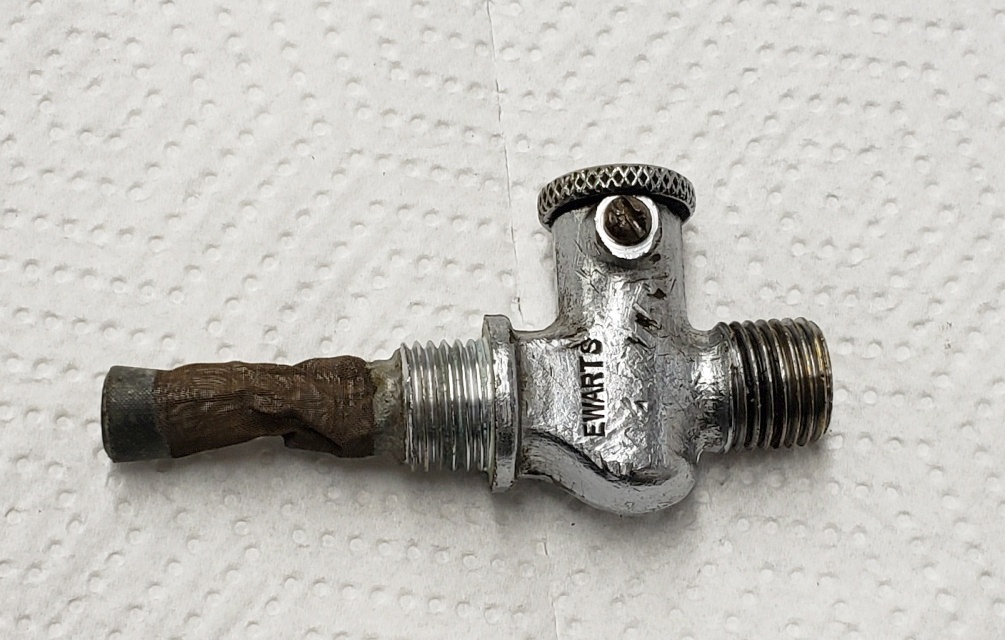
One of the charms of many vintage British bikes is the use of fuel petcocks made by Ewarts, and featuring a seal made by
a cork cylinder installed in a moving plunger. These actually work well, maintain originality and look nice with their chrome plating.
That said, they can be aggravating due to the tendency of the cork to wear out, or to shrink if left dry for a while. When this
happens, they leak - resulting in flooded carbs, paint damage from fuel drips, or in the worst case a fire.
Standard advice on this is to periodically remove the plungers and boil them in water. This swells the cork, restoring a good seal - but it's
a bit of a nuisance, and requires draining the tank first. An alternative is to install a modern petcock, which solves the problem.
But if you prefer to keep original equipment, there's
a simple fix to the Ewarts petcocks: replace the cork seal with a set of O-rings.
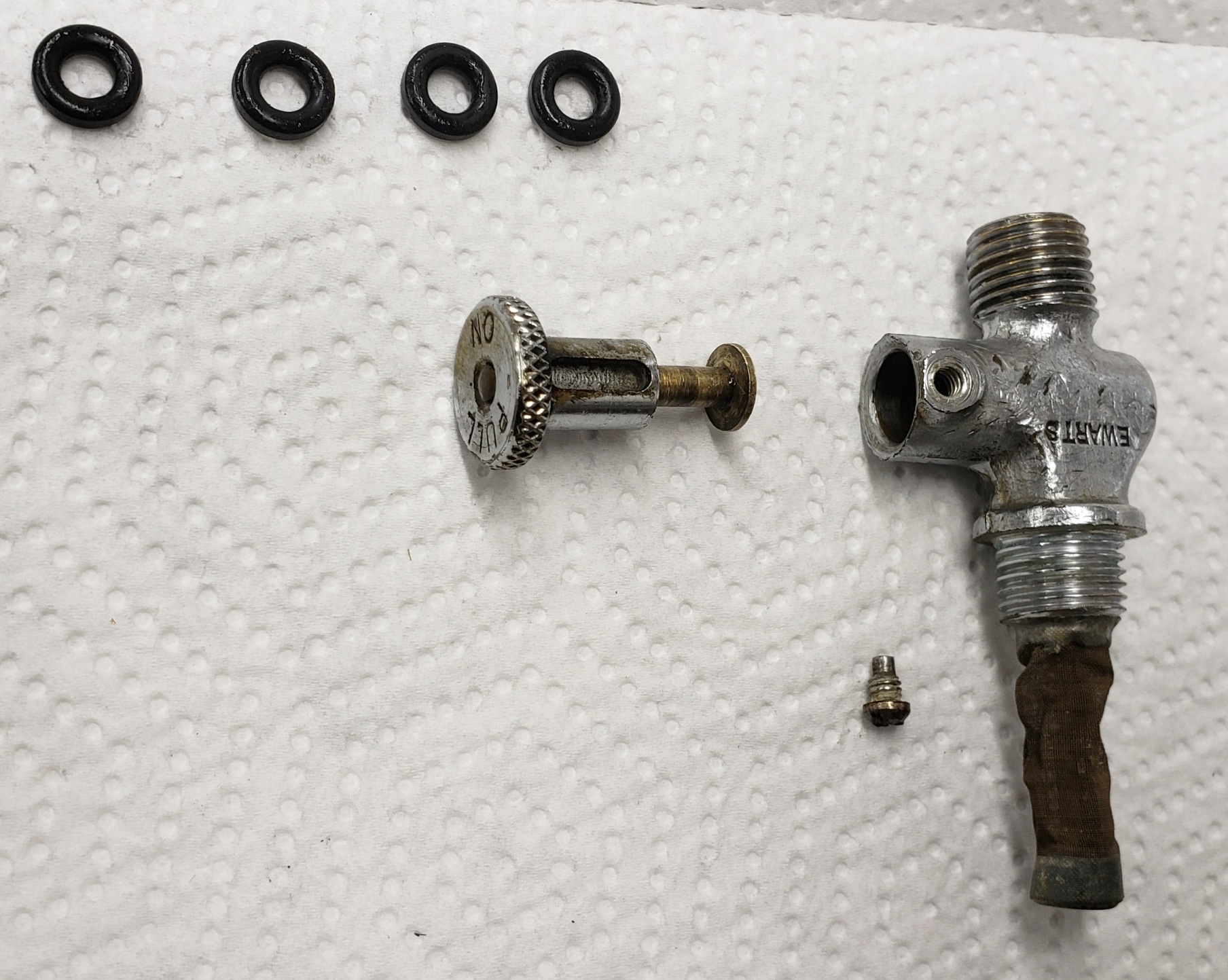
O-Rings
The required size is AS568-106: 3/16" ID x 3/8" OD x 3/32" cross-section. The material must be Viton or equivalent, for fuel resistance -
don't use ordinary Buna-N O-rings. Viton is a trade name; generic terms are fluoroelastomer or FKM. These O-rings are readily available at
industrial supply firms or online O-ring specialists. They're also often sold in kits on Ebay; search for 'Ewarts'.
Fitting
Remove the petcock from the tank, remove the small set screw on the side and pull out the plunger.
The 106-size O-rings will fit most Ewarts petcocks - but are likely to be on the tight side. After not being moved for
a day or so, they'll take a set and it will be very hard to pull out the plunger. There are a couple of ways to address
this:
- Four O-rings will usually fit on the brass shaft, but you can use only three - this will reduce the effort needed to
move the plunger, although introducing some play into the action. Sealing should be unaffected.
- You can size the O-rings to your petcock. Using calipers, measure the inside diameter of the bore in the petcock where the
plunger slides. You want the O-ring outside diameter to be around .003" - .005" greater than this, to seal while still sliding
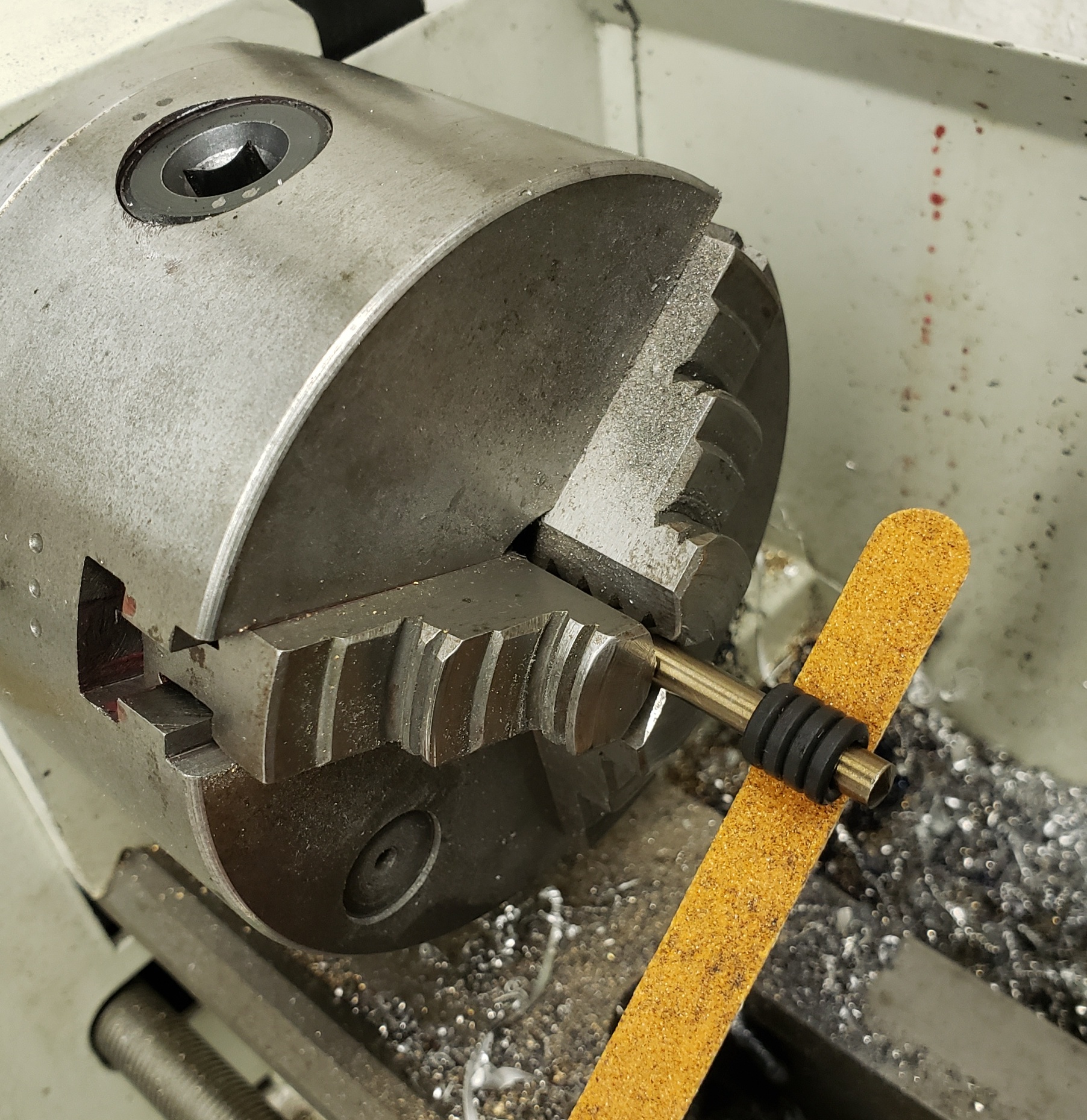
easily. Fit the O-rings on a rod or drill bit, sized so the rings grip it firmly. Chuck the shaft into a drill or lathe, and spin while sanding
down the rings with an emery board or similar. Measure the diameter frequently (remove the O-rings from the shaft first, as they'll
be stretched oversize), until they're the desired outside diameter. This is all easier and quicker than it sounds.
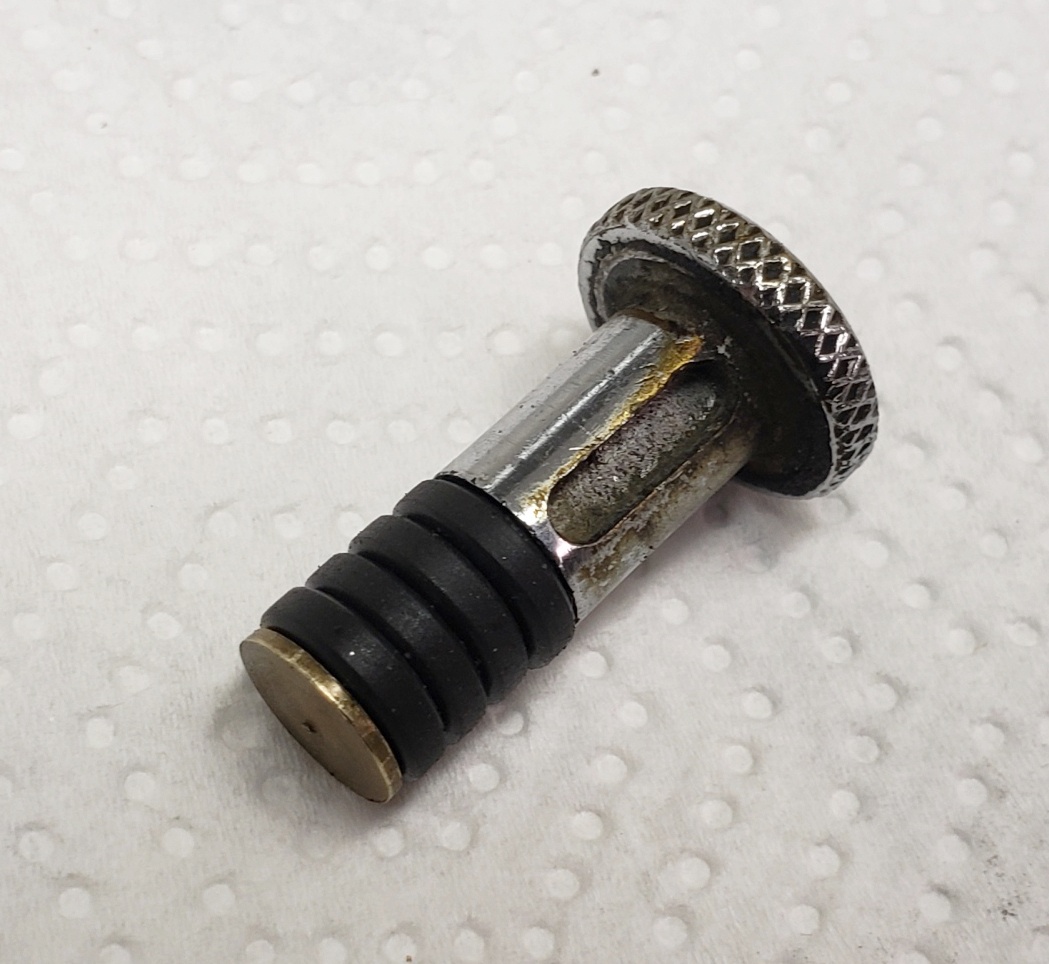
Installing
- There's no need to drive out the brass shaft from the handle, as you would if installing a new cork.
Just cut off the cork with a knife.
- Stretch each O-ring over the flange at the end of the plunger shaft. Normally four will fit; if not, use three.
- Optionally, smear a bit of lubricant over the rings. Silicone grease will work, special fuel-resistant lubricant 'EZ Turn' is better,
but expensive.
- Assemble the plunger into the petcock body, and tighten the set screw. It's not a bad idea to use just a hint of Loctite on this,
as there have been entertaining stories of what happens if it backs out and the plunger comes out entirely while riding.
- Test the petcock by blowing into it, making sure that flow is blocked with the plunger pushed in and unrestricted with it pulled out.
- Let the petcock sit a day or two, to make sure the O-rings haven't taken a set and made the plunger stiff. If they have, revisit the
sizing process.
Caveat
The O-rings will be sliding back and forth in the petcock bore, past the entry and exit holes through which fuel flows.
There have been reports of the edges of these holes cutting the O-rings, resulting in leaks or possibly obstruction. I've used
them for several years without any such problems, but it might be wise to inspect them whenever the tank is dry. Probably lubricant
helps, along with the rings being sized just large enough to seal.
|
